Pretty/Dirty: Unveiling the Artistry of Marilyn Minter
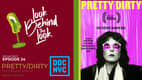


Presenting a new fest special. Jayce Bartok guest hosts to speak to the filmmakers of Pretty/Dirty which you can see at DOCNYC this year.
Filmmakers Jennifer Ash Rudick and Amanda M. Benchley speak on their new documentary, Pretty/Dirty, diving deep into Minter’s provocative art, exploring themes of beauty, power, and the female gaze. Jayce, Jennifer, and Amanda discuss how Minter’s work challenges societal norms while simultaneously celebrating the intricacies of glamour and rebellion. Listen in as they share insights about the creative process behind the film, the challenges of documentary filmmaking, and the significance of Minter’s unique perspective in the art world. With an emphasis on the importance of chosen family and the impact of ageism, this episode reveals the layers of Minter’s artistry and the cultural conversations it ignites.
See PRETTY/DIRTY at DOC NYC November 20 in NYC.
Get full access to Look Behind The Look at lookbehindthelook.substack.com/subscribe
Pretty Dirty is a film about photographer Marilyn Minter
Tiffany Bartok: Welcome to look behind the look, the celebrated podcast that explores your favorite looks in film, television and fashion history. Through conversations with the fashion world's elite and award winning hair, makeup and costume designers on sets around the world, you will see and hear exciting tales from behind the scenes career origin stories and tons of advice and tips. I'm your host, Tiffany Bartok.
Jace Bartok: Hi everybody. I bet you're expecting to hear Tiffany, but no, it's me, your guest host, Jace Bartok. I am so excited to talk about this film this week. Pretty Dirty, a film about the work of Marilyn Minter, an incredible photographer and artist. And let's not forget advocate, who I've admired and was fascinated to learn more about. I, have the filmmakers Jennifer Ash Ruddock and Amanda M. Benchley, who are also authors on the show today and we're going to dive into all things Marilyn. Marilyn's theme of taking really beautiful images and making them simultaneously powerful and dirty and interesting is something that really fascinates me. We're in the process of making a film on Dita Von Teese, who has similar ideas about glamour and beauty, and how powerful these images can be. So I was really excited to dive in with them. This is kind of our annual Doc NYC episode. Our film, Larger Than Life, the Kevin Aucoin Story premiered at DOC nyc a few years back. And it is a really fascinating and interesting festival here in New York City. So for those listening, Pretty Dirty is premiering Thursday, November 20th at 7:15pm and 9:30pm I highly recommend you get to DOC NYC and see it. It is just a wonderful film. I believe Marilyn will be there. I know when they premiered at the Hamptons, Cindy Sherman and other incredible luminaries showed up to support Marilyn. You can also see the film online starting Friday, February 21st through Sunday, November 30th through DOC NYC. If you want to watch in the comfort of your own home. When you listen or watch this episode, you will recognize Marilyn's imagery. Even if you don't know her work, you'll be like, oh my God, seen this before. Because her work has been so co opted by advertising and cinema that you'll be pretty surprised to learn about the originator of a lot of these ideas and images.
Marilyn Monroe's work is beautiful and edgy
So let's dive in with Jennifer and Amanda.
Jennifer Ash Ruddock: Her work is beautiful and edgy and raises a lot of questions and is both easy on the eye and difficult.
Amanda M. Benchley: I came to New York City in 1976. I just had this, you know, tunnel vision. I'm going to Come to New York and be an artist.
Jace Bartok: Marilyn is among that generation of women who the art world couldn't figure out or they were afraid of. And not only has she, you know, lived long enough to see that she's still making work at a furious pace.
Amanda M. Benchley: I haven't even done anything yet, you.
Jace Bartok: Know, in terms of what I want to make, my best work is yet to come.
Jennifer Ash Ruddick and Amanda M. Benchley are making a Marilyn Minter documentary
So I am here with Jennifer Ash Ruddick and Amanda M. Benchley, and we are talking about Pretty Dirty, a documentary about Marilyn Minter. Thank you both for being on the podcast. first of all, absolutely love the film. so relevant, fascinating. learn so much about Marilyn's work and just think that she is so awesome. Can you guys tell me about how you came to this story and what inspired you to make a documentary about Marilyn Minter's life?
Jennifer Ash Ruddock: I think this is a good one for Jennifer because it started. Because it started with her.
Amanda M. Benchley: Okay, great, thanks. so I think I, you know, it was a while ago, but I made a documentary on Iris Apfel.
Jace Bartok: I love that movie.
Amanda M. Benchley: Thank you. Thanks. It was, And you know, I saw in. I. I've known Marilyn for a few years for I. I've known her for actually many years. I' her for over 20 years. And, it. And Marilyn to me had that same kind of ineffable freedom, non conformist, that speaks, to something deeper in ourselves. In fact, Iris called herself a, geriatric starlet, and Marilyn refers to herself as a senior curiosity. and I think that kind of what I see, what I saw when Marilyn was surrounded by her friends and people who know her as well as Iris, is that, you know, there's such radical individualists that some people admire them, but they feel kind of, threatening, threatened by it, or they find it aspirational. But there's definitely an uneasiness. And yet both people are so beloved and authentic. And I think it taps into something deeper, in and in all of us. You know, I think. I think a lot of people crave to be much freer than they. They allow themselves to be. And, and of course in Maryland. So that's one layer of the story that I saw in, an Iris. Of course, it was a New York story and a fashion story, and in Maryland it's an art story and in New York story. And, in Marilyn is, you know, she. It's very hard to illustrate some other points which are kind of like talking about shame and alternative beauty and taking the, you know, a female gaze in art from the male gaze, which allows us to, you know, have the female gaze in life. And so Marilyn. The way Marilyn goes about life and of course, her art really reflects those topics and makes them kind of, easy to talk about.
Jace Bartok: Loved that theme in the film. Absolutely loved, first of all, loved Iris, but I see how you would be drawn to Marilyn's story. But, we are finishing a documentary on Dita Von Teese, the burlesque performer. And I loved, the kind of, in my mind, overlap of themes about how glamour is a tool for rebellion.
Amanda M. Benchley: Right.
Jace Bartok: But it also is sort of like a box that, someone can be put in as, like, representing the male gaze and how Marilyn sort of turns that on its head. And there's similar themes to Dita's life in that she is so glamorous, but she has inspired this sort of freedom of expression. So it's like Marilyn's work walks that fine line as well. So I was just fascinated, you know, by that theme. very much so. And also the late in life, kind of journey that she. At one point in the film, she says, I'm 53. And she. He's finally getting like, a, ah, show again, right?
Jennifer Ash Ruddock: No, she's actually not getting a show. She says that she, without giving it all too much away, but she was canceled in the early 90s, and then she had a comeback.
Amanda M. Benchley: But.
Jennifer Ash Ruddock: But let me say, like, maybe in the early 2000s, an art dealer came to her and were like, we want to do a show. How old are you? And she said, I'm 53. And then she never heard from the art dealer again.
Tiffany Bartok: Right.
Jennifer Ash Ruddock: Was like sort of the first note of ageism. is obviously another theme that we, are exploring since Marilyn's tackling the idea of ageism, with her art.
Jace Bartok: Yeah, I. I love that. I think we mentioned a little bit before we started rolling that my mom, Leanne Barchak, was a painter that came to SoHo in the. In the early 80s. Could not get into the art world at all. Total male dominated, you know, Absolutely. You know, impossible to kind of penetrate. So. So watching how Marilyn, like, her journey, it, was extremely inspiring. And you definitely feel that she's sort of, you know, with Jane Fonda and Monica Linsky, Monica Lewinsky and Lizzo, like that. She's in kind of the prime of her creative, you know, output right now. So that was, like, incredibly inspiring, to see Amanda.
How did you come to the film? I came because Jennifer suggested it
How did you come to the film?
Jennifer Ash Ruddock: I came because Jennifer and I been friends and colleagues for a long time, through sort of documentary work and also working at Maisel's Documentary center in Harlem. We were both on the board of that.
Jace Bartok: Wow.
Jennifer Ash Ruddock: and so she and I had been always talking and exploring film ideas. And I knew Marilyn from a book I had written about artists, personal collections of artists in their homes. So I had my own sort of Marilyn channel and experience with her. So she, she, when Jennifer suggested it, I just said yes. I mean, she's as, as Jennifer always calls her, she's the ultimate leading lady. So it seemed like a no brainer.
Jace Bartok: absolutely.
Making documentaries is one of the hardest moments in filmmaking
how long did the film take? What were the, the big challenges? as I know you both produce, direct, you know, making documentaries is like one of the hardest moments. It's like the marathon running of filmmaking. what were, what were some of the biggest, challenges and how long did it take you?
Amanda M. Benchley: It took us three years. And you know, I would say this was really less challenging than a lot of other projects I've worked on and a few that I've worked on that haven't seen the light of day yet. and I have hours and hours of footage and they're really, I believe, great subjects. But, you know, things don't always work out in documentaries. You don't get the funding, the subject loses interest. The, you know, the timing doesn't work for the editor or the shooters or whatever. You know, it's. They're oftentimes like passion projects, so they don't always work out. and this. We had a little hiccup in the beginning where, you know, we kind of over probably like got, we probably. I think Marilyn chickened out earlier. She said yes, then she chickened out. Totally understandable. I don't know if you'd ever want it. Like, I don't know how interesting a subject would be, you know, if they never chickened out of a documentary. That seems not too human to me.
Jace Bartok: Right, right.
Amanda M. Benchley: yeah. And then, and then we got back on course and you know, documentaries, like funding is always a thing. And we got super lucky with that with some incredible, incredibly generous executive producers. And one of our producers had a lot of, experience in funding and she, Debbie Wish, and she was amazing helping us with that. And, and so it went along like, as far as documentaries go, I would say it was pretty good. You know, now we're entering the sales phase, so.
Jace Bartok: Right, right, right, right. The sales phase.
Amanda M. Benchley: And we're super lucky. We have Amanda LeBeau at CAA representing.
Jace Bartok: Oh, that's great. That's great.
Amanda M. Benchley: Yeah. I don't know if you know her, but she's just, we feel in great hands. if anyone can do it, she can, but it's not an easy market.
Kevin Aucon's documentary about Marilyn Monroe premieres this weekend
Jace Bartok: And did you guys have your premiere, at Hampton's yet?
Amanda M. Benchley: No, this weekend.
Jace Bartok: This weekend. Okay. That's what I thought.
Amanda M. Benchley: Yeah.
Jace Bartok: Just wanted to get my dates, get my dates straight. that's going to be so exciting. I know the audience is absolutely going to love the film. Is Marilyn going to be in attendance? Yeah, right.
Amanda M. Benchley: 100%.
Jennifer Ash Ruddock: And all sorts of art. Other Cindy Sherman, you know, who's her best friend, and so she's done. Marilyn has a new painting show of her icons, opening in la, and Cindy Sherman is one of them. as is Jane Fonda, as is Jeff Koons, and those will all be debuted. But, we're gonna have a lot of sort of starry art people in the audience as well this weekend.
Jace Bartok: Oh, my God. Is Saturday night, Saturday night premiere Saturday morning?
Amanda M. Benchley: Saturday morning and Sunday afternoon.
Jace Bartok: Okay.
Amanda M. Benchley: But yeah, you know what? I think we also got so lucky with Marilyn that people, come out for her. You know, she opened her Rolodex to us and, you know, you don't want the doc to look like a tribute, and it doesn't. But what was really amazing about it, and I found this with Irish too, is people will take our calls, they'll be on film when they normally wouldn't. and yet they'll speak very honestly about the, you know, about the person's ups and downs and the pluses and minuses. It's not all sugar coated. So, and they're coming out for the premieres. So we also premiere at, in New York City at Doc nyc.
Jace Bartok: Oh, great.
Amanda M. Benchley: They're not making their announcements today. Have you shown a film there?
Jace Bartok: Yes. Our Kevin Aucon doc played Hamptons and then Doc nyc. Yeah, great. Love Doc nyc.
Amanda M. Benchley: I love.
Jace Bartok: Yeah, yeah, love that. I love to, How, you. You, Well, one. How you got Jane Fonda, you know, who is so outspoken but still to talk about. She's like, I don't do sex anymore. Or, you know, you got into that whole chapter of, you know, she was like, I can't get that book of yours, Marilyn, because it's just like, I can't do that, you know, and just all of those things are just so, relevant. And, you know, it was just wonderful that the film went that way.
How did that process go once she committed you? How did that
But what you were talking about is also, the, like, access to the subject, like how how did that relationship go with Marilyn? Like, she was reluctant at first. And then what was that process, like, where she sort of let you in? you captured her at work. You know, you captured her with her husband. How did that process. How did that process go once she committed you?
Amanda M. Benchley: You.
Jace Bartok: It was smoothly smoother.
Jennifer Ash Ruddock: Yeah, well, we,
Amanda M. Benchley: So what.
Jennifer Ash Ruddock: What happened is that we started. We wanted to just do a pure verite film, right? And that's when she sort of chickened out because we said, can we have your, you know, hair salon appointments? Can we have your entire diary because we want to follow it all. And then she said, And then. And then Jennifer and I regrouped and said, okay, we can do this a different way, where, it won't be all verite, and we'll bring in these other, people. and then because Marilyn is a leading lady, she got quickly accustomed to the camera, and then she would say things like, do you want me to do that over again?
Jace Bartok: Yeah, I could. I could see that.
Amanda M. Benchley: Yeah.
Jace Bartok: I was funny. I was at a wedding over the weekend, and I was sitting next to, an artist, Matthew. I didn't get his last name, but he. I was like, yeah, I just watched this documentary on Marilyn Mitra. He was like, oh, I know Marilyn. He was like, everybody knows Marilyn. And he was just talking about, like, of course, how she's this force, you know, like, you. You can't miss Marilyn, you know, and that you can feel her lighting up, you know, in front of the camera throughout the process of. Of the film, you know, Very much so.
Jennifer Ash Ruddock: Well, you know, she. Randy Kennedy, who, you know, runs Ursula magazine, for Hauser and Wirth, and was a New York Times critic. He.
Amanda M. Benchley: He.
Jennifer Ash Ruddock: I don't think it made it into the film, but he. We interviewed him, and he spent a lot of time talking about her being, like, a great Southern dame, because she is Southern, despite the fact that she's so associated with New York. But she has all of that Steel Magnolia sort of charm, to this day.
Jace Bartok: Oh, 100%. Yeah.
Amanda M. Benchley: Yeah.
Jace Bartok: can you. I love how you use the letters, from her mom, as you know, because always, the challenge with the documentary, for those of you who are listening, who are thinking about making a documentary, is the antagonist, right? Like, what's the antagonist to the story? Like, in our case for Dita, she doesn't have an antagonist, even though she was married to Marilyn Manson, who seems like the biggest antagonist in the world. But, like, when you're trying to structure the film so I loved how you used the letters from her mom as this very, like, relatable and real thing, like telling her, like, I don't know what you're doing, but you're going down the wrong path.
So can you tell me about, like, uh, difficulty structuring the story
So can you tell me about, like, difficulty structuring the story, how those letters worked in and how you navigated, you know, the flashbacks or the kind of linear. I think you guys kept it pretty linear in terms of, like, present day in the studio and jumping back to sort of her. Her, you know, moving through the New York art world. What were the challenges to the structure?
Amanda M. Benchley: Amanda can speak to this, too. but Amanda loves archival.
Jace Bartok: Who doesn't? Who doesn't?
Jennifer Ash Ruddock: I work for. I work for A E in the History Channel for a long time, so it's really my.
Amanda M. Benchley: But, background, you know, to me, I don't know, it's when you. It's. It's kind of like you film and film and film, and then by the time you're finished filming and of course, you're kind of organizing footage and. And thinking of storylines the whole time. But, it just becomes clear, you know, what. What it should be. And so we never. We did try at one point to do, like, a storyboard and to kind of do a script.
Jace Bartok: Right.
Amanda M. Benchley: But I didn't. I don't think that was more like a. Like. Like a way to process and regroup. I don't think we ever stuck to anything. And we were very much, you know, like, moment and, you know, trying to figure out the story as we went along. And Marilyn kind of came up with the. She was talking about her mother, and. And she said, yo, she used to write me letters. I was like, oh, my God, those would be great to see some. And. But I never thought she would have kept those letters. She's like, oh, I have them all.
Jace Bartok: Wow.
Amanda M. Benchley: Which is so crazy that she kept those very hurtful letters. And. And so she said she would read them on screen, and. And that was like a gift. And then, And then Amanda went over and re. Had her reread some. And then Philip, Sanchez, our assistant editor, did the graphics of her writing them, which I thought was brilliant.
Jace Bartok: Yeah.
Jennifer Ash Ruddock: Yeah.
Amanda M. Benchley: It just, Would you say that Amanda, the story just. I think the.
Jennifer Ash Ruddock: I think the mother, you know, is everything in the story.
Amanda M. Benchley: Right.
Jennifer Ash Ruddock: Because the mother also is the germ or the kernel of her pretty, dirty.
Jace Bartok: Sort of her creative breakthrough. Yeah.
Amanda M. Benchley: Right.
Jennifer Ash Ruddock: And also just the. The sort of tension that she's always working with. And, like, back to what you were saying about the. Using the idea of glamour, like in this film, Jenna the artist, Jenna Gribbin says, like, that she and Marilyn use beauty as a Trojan horse. You have these very beautiful images they paint, and then you look closer, you're like, whoa, what's going on here? This is pubic hair. Or this is a. This is a very dirty shoe that we thought was a beautiful, sparkling shoe. So the mom sort of encapsulated that, because she's this very glamorous Southern mom who was a drug addict.
Amanda M. Benchley: Right.
Jace Bartok: Was very unkempt at the fungus under the fingernails.
Amanda M. Benchley: Right, right. And her mom also, as you see through the letters on a whole nother level, just instilled so much shame in her. And it's a shame that she is always trying to work through. And I think that's so, relatable for many of us. You know? I don't know why, but women are born into shame, it seems like. And trying to get through that is, is part of Marilyn's journey that.
Jace Bartok: Really comes through in the film. Yeah, it's very powerful.
Amanda M. Benchley: Yeah.
Amanda and I have parallel lives because we both have books coming out
Jace Bartok: what is, next? Obviously, you guys are premiering at the Hamptons, and you're looking for a distribution deal, which I know, you will get. what's next for your lipstick? what's next for. For the both of you? I guess you're seeing this through, but any, anything that you're working on, that you're, you know, anything you're working on right now?
Jennifer Ash Ruddock: We have books. We both do books because we're journalists.
Amanda M. Benchley: It's funny. Amanda and I have parallel lives because we both have, book contracts and books and deadlines and books coming out. But, But we love this. I think we both just love storytelling, so. But we've definitely have some ideas that we've thrown back and forth, but it takes.
Jennifer's third in a series about houses and gardens of the Hamptons
Jennifer Ash Ruddock: When's your book coming out, Jennifer?
Amanda M. Benchley: spring. And then I have another one coming out. spring 2026. And I have another one coming out fall 2026.
Jace Bartok: But what. Can you tell us what the books are, what they're about?
Amanda M. Benchley: Oh, sure, sure. so I do these books with Van Dome Press, and, this one that's coming out is Books on Houses and Gardens of the Hamptons.
Jace Bartok: Oh, wow.
Amanda M. Benchley: Yeah. but they're kind of. They're a little bit. I like to think of them as a little bit like this. They're. The houses are not always decorated. You know, some of them are just like family houses that are a little unkempt A little. Maybe a world of interiors, things you wouldn't normally see, to kind of create a portrait of life out there. and then I have one coming out in next fall on, Small Spaces, but inspirational Small Spaces, kind of, which, you know, kind of small wonders. It's called wow. Yeah. And Amanda, when is yours coming out? Amanda's, like, on her third in a series.
Jennifer Ash Ruddock: Second. Yeah, my. I have a book, called Hudson Folk that the Creative. About the creative community in the Hudson Valley.
Amanda M. Benchley: Oh, wow.
Jennifer Ash Ruddock: That Marilyn is a part of, though. It was a little bit double dipping, so we did not profile Marilyn for this book, but it's a sequel to a book that came out a couple years ago about the creative community of Martha's Vineyard. By the way, Marilyn's part of both of those communities, but.
Jace Bartok: Oh, wow. That's.
Jennifer Ash Ruddock: Yeah, it's the same. I mean, you know, Jennifer and I, yeah, we're interested in personalities and. And, communities and. And creatives.
Amanda M. Benchley: Yeah.
Jace Bartok: Right.
Jennifer Ash Ruddock: Like Marilyn.
Amanda M. Benchley: Yeah. I think something else about Marilyn and about Iris and about, like, maybe Vita Titavanti. Vita D Is, Is that they're known in their circles. You know, they're so. Well, everybody knows all of them. Right. But they are. And they are leading ladies, but they're not known to the larger world completely.
Jace Bartok: Yeah.
Amanda M. Benchley: There's still this room to kind of, you know, explore and a room to introduce them to people. It's not like making a celeb doc or something, you know, which is super exciting. Just. And, you know, I hope this, It's just super exciting to introduce someone to the larger world who has. Who. Who has already fascinated the world that she lives in, the people in the world she lives in. And, it's hard to find that. So we're looking for another subject like that.
Jace Bartok: Yeah. Yeah.
Jennifer Ash Ruddock: Also, like, Marilyn, like, as one of our other little sort of subtexts is that, like, she's impacted all of us. Even if you haven't heard of Marilyn, her eye and her art has impacted film and advertising and television and music videos, in such a way that almost feels like when you go back and look at her, you're like, oh, it's. It's derivative. But actually, no, she's the original.
Jace Bartok: Oh, you. That came through, like, so loud and clear. Like. Like her. Those images are so embedded into, you know, fashion and music video and, you know, it's. I felt that, like, you know, I knew her name, but I really didn't know that much about her. But then I was like, oh, okay.
Amanda M. Benchley: You know.
Jace Bartok: You know, in the story about Tom ford and his $40,000 shoes or whatever getting muddy and her. Can you talk a little bit about her, creative process? Because the podcast look behind the look is obviously about, the look behind the look. So her. What you were just describing, that pretty dirty aesthetic is So I.
Can you talk about her process of creating these incredibly beautiful and not grotesque images
Can you talk about her process of creating these incredibly beautiful and not grotesque, but arresting images, like, and getting to know her. And what was the glimpse into her process?
Jennifer Ash Ruddock: Provocative, I think, is what you're. The word you're looking for.
Jace Bartok: Thank you.
Jennifer Ash Ruddock: Provocative, but Provocative. But, also, I'm just. I'm so glad you said that, because that means we did our job of. Of telling her story. So that makes me feel.
Jace Bartok: Oh, completely. And. And the living with her, you know, like, with her husband in the gardens and. And all these other aspects to her life, like, she has that quality that you know her, but you. But she's still like, you don't know her. You know what I mean? So it didn't feel like a celebrity doc in any way. But. But yeah.
Could you talk about her process? Like, how does she come up with this imagery
Could you talk about her process? Like, how does she come up with this imagery? I know in the film, she talks about working on images for, like, three years, and, you know, and she just kind of works away. Can you just tell us a little bit about that?
Amanda M. Benchley: well, she. You know, she chooses this. This most recent work. I'll say. they're her heroes, you know, so they're people who have inspired her. Glenn Ligon, Ryan McGinley, Jane Fonda, Lizzo, Monica Lewinsky, Cindy Sherman. She's painted them all.
Jennifer Ash Ruddock: Gloria Steinem.
Amanda M. Benchley: Yeah, Gloria Steinem. Pamela Anderson. She did Pamela Anderson, by the way, like, long before Pamela Anderson, as we know her now. Like, she took all of her. Make Pamela's makeup off, and she cut her hair and put her in the shower and put her with their dogs. And, you know, she humanized her before Pamela had the courage to humanize herself. And I think part of Marilyn doing that for her, I can't help but I can't speak for either of them, but I can't help but imagine that that was part of the process. And, So she humanizes these people and paints them because, you know, she believes in them and wants to put them out there. And she. And the process itself, Amanda can probably speak much more articulately about this, but it's enamel on aluminum, enamel on metal. On metal. Yeah. Yeah. It's a very slow, tedious process. And what Marilyn has often said is Even she doesn't think. I mean, she. She does believe that her art will survive the test of time. But part of the reason she thinks so is not just because she' a skilled painter in the old master way, but also because, it's a craft, you know, and. And what she's doing is. Is really hard to do. it's. Amanda, can you speak more articulately about this?
Jace Bartok: That was very articulate.
Jennifer Ash Ruddock: That was very articulate, but I think.
Jace Bartok: Very articulate.
Jennifer Ash Ruddock: Yeah. I think backing up is that, you know, she works from photography. She takes a photo. She takes a million photographs of her subject, then she photoshops and takes an eye from this place, from this photo or. And puts together the image that she wants to paint. And then she blows it up. They trace it, and then it's just layers and layers and layers of enamel paint, which is like nail polish. Right. So it's shiny. It's not oil paint. and they take a year, and then finally they're sort of laminated, to be even extra shiny and glamorous and appealing and irresistible. And, so that's her technical process.
Jace Bartok: And I love, her touching, the paint.
Jennifer Ash Ruddock: Right.
Jace Bartok: Yeah. Because Kevin o', Kwan, he put on makeup with his giant hands, and pretty painful to all the supermodels. But like I said, you know, she's doing that. And I thought about, like, in the film, you do a good job of showing the. You can see the fingerprints in there, and you say that it. Like, she says that it adds, I can't remember the expression that gives them room to breathe or they come to life, I think, almost because, like, the space between the fingerprints, like, makes them feel like they're organically kind of constructed, even though they're these beautiful, like. Like the most beautiful photographic, glamorous images, you know? I love, too, the freedom that she has to, like, grab an eye from this Cindy Sherman and put this other Cindy Sherman knife here. And. But it all comes back around to being this sort of painterly, organic thing in the end, you know, so it.
It has this sort of very glossy, shiny, glamorous thing, but also this very
It has this sort of very glossy, shiny, glamorous thing, but also this very, like, kind of touched, painted thing, you know, the tactileness.
Jennifer Ash Ruddock: Right. So, you know. So you know that it's made by hand, right?
Jace Bartok: Yeah.
Jennifer Ash Ruddock: so. And we shot all of that with a macro lens so you could really see sort of the. The. Her actual fingerprints, up. Ah, Close.
Jace Bartok: Yeah. And I love the time in the studio with the, you know, the steaming and the. The Wiping it off and the steaming. And seeing that her team of collaborators is. They seem to have been with her, like, for her entire career. her studio manager, her assistant. I forget his name.
Amanda M. Benchley: Yeah.
Jace Bartok: Yeah. Johan is such a great. Yeah, great in the film, but it seems like. Yeah. So how to, like, I guess how that also, to me, symbolizes an artist that, you know, when you have that kind of, like, close family and those. Those kind of ties in the film, you talk about it. This is like another family. Right. She created her own family.
Amanda M. Benchley: Yeah. And I. I think, in hearing about the painting, I'm thinking, you know, we call that sub. We called that in our minds when we were doing the film. that scene is. We call the magic of painting when we were putting it together. And, And it made me think about, like, why.
Pretty Dirty is a wonderful documentary about Marilyn Minter
Back to why I choose Marilyn is, Another thing that had struck me when I did Iris is like, you know, this is a story that can best be told on film. You know, it's not a play, it's not a book, it's not a magazine article, it's not a newspaper article. As hard as people might try. And, you know, and we work with what we're given, but to experience that, the glory of Marilyn's painting and of her process and of her relationships, it's really best told. And the documentary. So, it's kind of experience. It's the closest you're going to get to an actual experience.
Jace Bartok: You know, you feel that in the film, like, just all those things we were just talking about. I do. I think it's, like, such a great representation of, you know, you really feel her work.
Amanda M. Benchley: Yeah. Thanks. And I think. And that now bouncing back to this selected family is, I think that's super relatable these days, too, when so many people are separated from their family, whether they want to be or not, or they are. You know, a lot of people in New York don't live with their families. And we have these chosen families, much more so than we used to. And, And it's really beautiful to see how they have Surround. How. How they support and hold up one another. And they all have been with her for a very long time. and that's saying something because they're in that studio working very hard, and even though the deadlines are sometimes, like, four years away, they're always on deadline. They always have that hanging over their head. Because, working artist who's being. You know, her art is being. She has shows scheduled, she has. It's It's a job at this point for her, and she understands that too. She, she is through and through an artist, but she does have a. She is a professional.
Jace Bartok: Oh, yeah. You, you feel that she balances, I guess, like the Andy Warhol of it all with, with something that is completely unique to her. that, that she is a professional, but she's, you know, so you definitely feel that. I love yet too. And she's like, if I broke my arm, right, Johan would. I would trust him to set it off of a YouTube video. but thank you both. I, I wish you the best of luck. I know the film will find its way. It's just a wonderful film. I really enjoyed it. And good luck. Saturday and Sunday at the Hamptons and DOC NYC is in November, correct?
Amanda M. Benchley: Yeah. I hope you'll come.
Jace Bartok: I'm gonna come to Doc. I, I, I. There was a chance I might make it to the Hamptons this weekend, but it is our anniversary, so no better place to spend it than the Hamptons Film Festival.
Amanda M. Benchley: Don't you want to celebrate it with us?
Jace Bartok: I know I would love to come, and, and see the film on the big screen. I. You're going to have such a great screening. People are going to love the film. But congrats and thank you both for talking about Pretty Dirty, your documentary about Marilyn Minter. Amanda and Jennifer. Thank you so much.
Amanda M. Benchley: Thank you for having us.
Jennifer Ash Ruddock: Thank you. Super fun.
Look behind the look is a vinyl foot production written by Tiffany Bartok
Amanda M. Benchley: Great.
Tiffany Bartok: Look behind the look is a vinyl foot production written by me, your host, Tiffany Bartok. Produced by Jace Bartok, edited by Magress Thakor. If you're interested in learning more, find our video version on the YouTube channel look behind the look podcast. There you can see rare photos and clips from our guests and please follow us on Twitter @lookbehindpod and Instagram @lookbehindthelook. If you like the show, please rate, review and subscribe and tell your friends and spread the word. You can subscribe to us on itunes or any podcatcher of your choice. Thanks for listening to look behind the Look.
